A journey of craft built on trust, confidence, and focus
Lessons I learned during my first year at Linear about design, collaboration, and growth.

I’ve always been a maker at heart—someone who loves to bring ideas to life. When AI exploded, I saw a chance to create something new and meaningful for solo designers. But making Griffin AI was only half the battle…
About a year ago, a few months after GPT-4 was released and took the world by storm, I worked on several AI features at Convex. One was a straightforward email drafting feature but with a twist. We incorporated details we knew about the sender—such as their role and offering—and the email recipient, as well as their role plus info about their company’s industry. To accomplish this, I combined some prompt engineering and data from our data providers, shaping the responses we got from GPT-4.
Playing with this new technology was incredibly fun and eye-opening. And that gave me an idea. Foundational large language models (LLMs) aren’t great yet for factual data retrieval and analysis. But they’re pretty decent at creativity. No, GPT, Claude, or Gemini couldn’t write an Oscar-winning screenplay or win the Pulitzer Prize for poetry, but it’s not bad for starter ideas that are good enough for specific use cases. Hold that thought.

Apple finally launched its Vision Pro “spatial computing” device in early February. We immediately saw TikTok memes of influencers being ridiculous. I wrote about my hope for the Apple Vision Pro back in June 2023, when it was first announced. When preorders opened for Vision Pro in January, I told myself I wouldn’t buy it. I couldn’t justify the $3,500 price tag. Out of morbid curiosity, I would lurk in the AVP subreddits to live vicariously through those who did take the plunge.
After about a month of reading all the positives from users about the device, I impulsively bought an Apple Vision Pro. I placed my order online at noon and picked it up just two hours later at an Apple Store near me.
Many great articles and YouTube videos have already been produced, so this post won’t be a top-to-bottom review of the Apple Vision Pro. Instead, I’ll try to frame it from my standpoint as someone who has designed user experiences for VR.

After years of rumors and speculation, Apple finally unveiled their virtual reality headset yesterday in a classic “One more thing…” segment in their keynote. Dubbed Apple Vision Pro, this mixed reality device is perfectly Apple: it’s human-first. It’s centered around extending human productivity, communication, and connection. It’s telling that one of the core problems they solved was the VR isolation problem. That’s the issue where users of VR are isolated from the real world; they don’t know what’s going on, and the world around them sees that. Insert meme of oblivious VR user here. Instead, with the Vision Pro, when someone else is nearby, they show through the interface. Additionally, an outward-facing display shows the user’s eyes. These two innovative features help maintain the basic human behavior of acknowledging each other’s presence in the same room.

I know a thing or two about VR and building practical apps for VR. A few years ago, in the mid-2010s, I cofounded a VR startup called Transported. My cofounders and I created a platform for touring real estate in VR. We wanted to help homebuyers and apartment hunters more efficiently shop for real estate. Instead of zigzagging across town running to multiple open houses on a Sunday afternoon, you could tour 20 homes in an hour on your living room couch. Of course, “virtual tours” existed already. There were cheap panoramas on real estate websites and “dollhouse” tours created using Matterport technology. Our tours were immersive; you felt like you were there. It was the future! There were several problems to solve, including 360° photography, stitching rooms together, building a player, and then most importantly, distribution. Back in 2015–2016, our theory was that Facebook, Google, Microsoft, Sony, and Apple would quickly make VR commonplace because they were pouring billions of R&D and marketing dollars into the space. But it turned out we were a little ahead of our time.

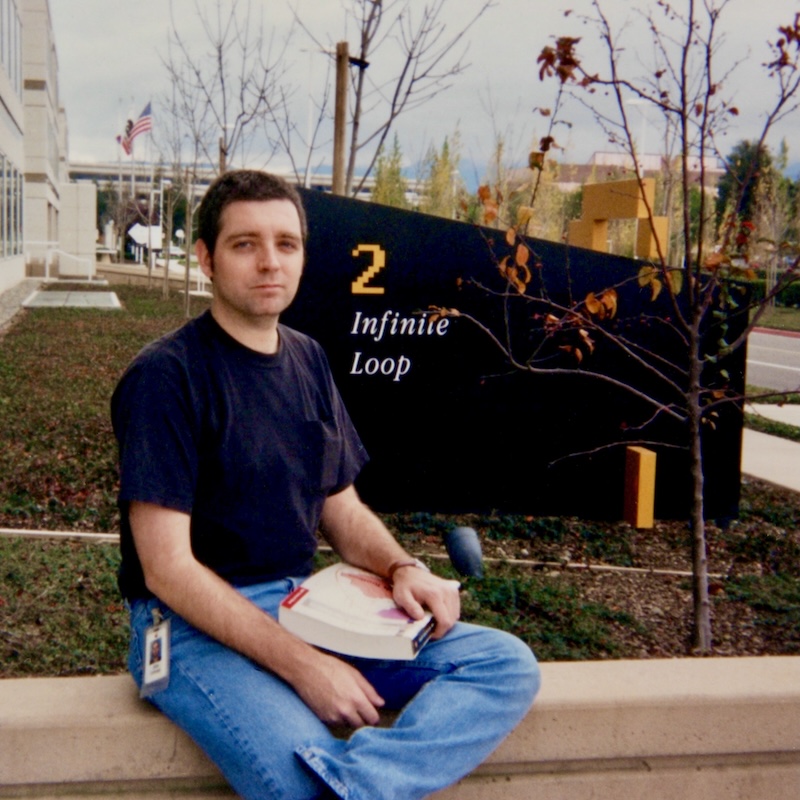
I recently came across Creative Selection: Inside Apple’s Design Process During the Golden Age of Steve Jobs by former software engineer Ken Kocienda. It was in one of my social media feeds, and since I’m interested in Apple, the creative process, and having been at Apple at that time, I was curious.
I began reading the book Saturday evening and finished it Tuesday morning. It was an easy read, as I was already familiar with many of the players mentioned and nearly all the technologies and concepts. But, I’d done something I hadn’t done in a long time—I devoured the book.
Ultimately this book gave more color and structure to what I’d already known, based on my time at Apple and my own interactions with him. Steve Jobs was the ultimate creative director who could inspire, choose, and direct work.

This is the second article in a three-part series offering tips on how to get a job as a product or UX designer. Part 1 covers your resume and LinkedIn profile. Part 3 is about the interviewing process.
As I mentioned in Part 1 of this series, portfolios used to be physical cases filled with your work, and you only had one of them. But now that portfolios are online, it’s much easier to get your work out there.
Much like resumes, many designers make the mistake of over-designing their portfolio website, trying to use it as a canvas to show their visual design or interaction chops. Don’t do it.

This is the first article in a three-part series offering tips on how to get a job as a product or UX designer. Part 2 advises on your portfolio website. Part 3 covers the interviewing process.
(With apologies to Maxine Paetro, whose seminal 1979 book How to Put Your Book Together and Get a Job in Advertising was highly influential in my early job search process in the mid-1990s.)
I graduated from design school in the spring of 1995. Yahoo! was incorporated just a couple of months before. AOL was still the dominant way everyone connected to the Internet. Tim Berners-Lee’s World Wide Web was still a baby, with just a tiny fraction of websites available. In other words, my design education was about graphic design—layout, typography, logos, print. Neither digital design nor UX design was taught or barely practiced yet. (The closest thing would be human-computer interaction, more computer science than design.)
The San Francisco graphic design scene back in the early- to mid-1990s was pretty close-knit. Most of the established practitioners in The City taught at the California College of Arts & Crafts (CCAC, but now shortened to California College of the Arts (CCA)), fertile ground for finding interns and junior designers. Regardless, all of us graduating seniors needed to have portfolios. Physical portfolios. Some books—another name for portfolio—were basic: a leather folio with plastic slip pages filled with mocked-up posters, booklets, or photos of projects. Or some designers would custom bind books with special hardware and print their work on fine paper, spending hundreds of dollars. But you had one book. So when applying for jobs, you had to leave your book with the design studio for a few days to a week! Which meant that job hunting was very slow going.

I have always liked writing. I don’t fancy myself a professional writer in any way. Still, I like having an outlet (or outlets) for my random musings as I work through understanding the world, be it design, technology, or whatever. While I have published various blogs in the past or written articles and essays on Medium, I want my content hosted on a platform I own and control. So, I’m consolidating everything here on my personal site, which may become a haphazard amalgam of subjects.
This is officially the first post on this site, but I will be bringing in posts from the various past platforms and backdating them to their original publication dates.
I will also use this site to post links to stories and articles I’m reading. It will inevitably be an assortment of design, tech, Apple, and politics.

This was originally published as an item in Issue 003 of the designspun email newsletter.
It is no secret that Twitter has enabled and emboldened Donald Trump by not restricting any of his tweets, even if they violated their terms of service. But earlier this week, they put misinformation warnings on two of his tweets about mail-in ballots. This angered the President but also got the ball rolling. Snapchat shortly followed by saying it will no longer promote Trump’s account. Against the backdrop of growing protests against the murder of George Floyd by police, some tech companies finally started to grow a conscience. But will Silicon Valley change? Mary-Hunter McDonnell, corporate activism researcher from the Wharton School of Business says, “Giving money to organizations that are out on the front lines is more helpful, but it’s also to some extent passing the buck. People are tired of that.”
As designers, we have some power over the projects we work on, and the products we create. Mike Monterio wrote in February, “At some point, you will have to explain to your children that you work, or once worked, at Facebook.”

We communicate in stories. Storytelling has been around as long as our species has existed. From paintings on cave walls in Lascaux, to hieroglyphics in ancient Egypt, to radio dramas like “War of the Worlds” that cause city-wide panic, to the fantastical Game of Thrones television series on HBO, stories impart culture, history, information, and ideas. Stories are primal so we are receptive to them, and we remember them.
Today when we think of storytelling, we think of our modern day’s Golden Age of Television or the Marvel Cinematic Universe (“MCU”) movies. Comic-Con in San Diego is the Mecca of pop culture storytelling, and this year brought an estimated 135,000 fans from over 80 countries. Attendees packed over 2,000 panels and screenings and lined up for more than 250 autograph events from their favorite actors, writers, and artists. Fans lined up for hours, often overnight, for a chance to get into the infamous 6,500-seat Hall H where they were able to get a glimpse of their favorite star talking about their latest film or TV project. Many came to the con dressed as their favorite characters, often constructing their own elaborate costumes. That is fandom, otherwise known as brand loyalty.
What lessons for design and branding can we learn from Comic-Con and its pilgrimage of rabid fans? Storytelling has power, and design is storytelling.
The design blog connecting the dots others miss. Written by Roger Wong.
If you’re new here, check out what others are reading in the Popular feed.